Your heat pump just quit at the worst possible moment, and now you're staring at a repair estimate that looks like a down payment on a new car. Before you panic and write that check, you should know that most HVAC companies aren't telling you the whole story about what's really wrong with your system.
Here's the uncomfortable truth: many heat pump repairs in Greensboro are completely unnecessary, designed to squeeze every last dollar from homeowners who don't know any better. I've watched countless families pay thousands for "critical" repairs when a simple $200 fix would've solved the problem permanently.
The real issue isn't your aging unit or the North Carolina humidity. It's that most technicians are trained to upsell, not to solve your actual problem efficiently.
But there's good news. Once you understand the three most common heat pump myths and the tell-tale signs that your technician is feeding you a line, you'll never overpay for repairs again. Ready to learn what the HVAC industry doesn't want you to know?
Myth #1: “Your 10-Year-Old Heat Pump is Beyond Saving” – The Truth About System Age vs. Actual Problems
Let me drop some truth on you that’ll save you thousands. The minute a technician shakes their head and says “Well, it’s over 10 years old…”, your bullshit detector should be screaming. Age is the easiest scapegoat in the book. Here’s the reality: your heat pump doesn’t have an expiration date stamped on it like a gallon of milk.
I’ve seen 15-year-old Rheem units still humming along perfectly because the owners changed their filters regularly and didn’t ignore strange noises. Meanwhile, I’ve ripped out 6-year-old Lennox systems that were destroyed by neglect and backyard installation hacks. The real question isn’t how old is it but how has it lived?
Your heat pump is made of individual components. Not all of them wear out at the same rate. Here’s what actually matters:
- Has the refrigerant charge been checked annually?
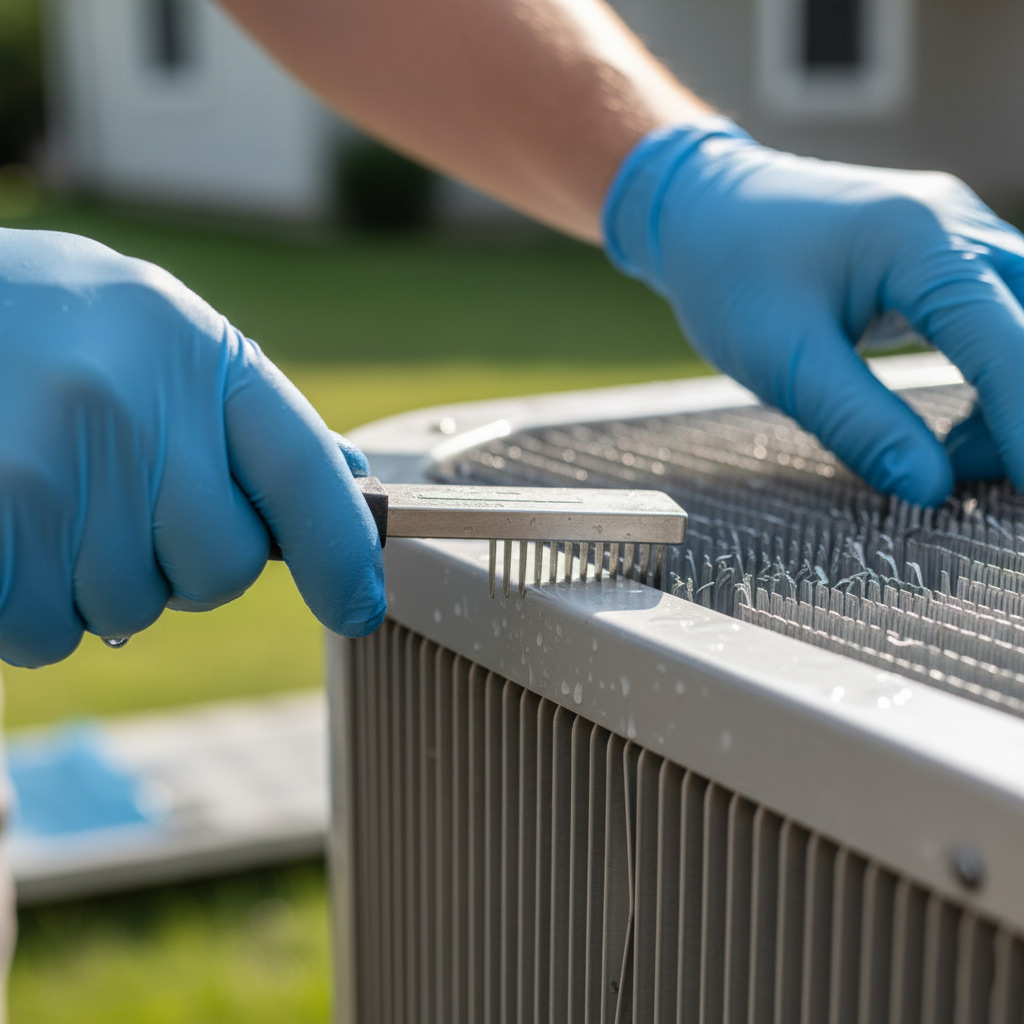
- Are the coils clean or caked with Greensboro pollen and dirt?
- Do electrical connections show corrosion from our humidity?
- Has anyone actually tested the compressor windings or just guessed?
The Greensboro Climate Factor: Why Humidity and Temperature Swings Create Unique (and Often Misdiagnosed) Heat Pump Issues
Greensboro doesn't just have four seasons – it has four seasons crammed into what feels like two weeks. One day you're sweating through your shirt in 85° heat, the next you're digging out jackets because it dropped to 50° overnight. This isn't just annoying for your wardrobe choices. It's murder on your heat pump.
Here's what happens inside your unit during these wild temperature swings:
- Refrigerant pressures spike and crash like a teenager learning to drive stick shift
- Electrical components expand and contract faster than your bank account during Christmas shopping
- Moisture builds up in places it shouldn't, creating corrosion that looks serious but cleans up easily
Most HVAC techs see these symptoms and immediately diagnose a dying compressor or failed reversing valve. They're not lying – they're just trained to think worst-case scenario. But here's what they're missing: 90% of these issues are temporary and reverse themselves once the weather stabilizes.
Take the classic "low refrigerant charge" diagnosis that costs you $800. In Greensboro's humidity, your system might ice up on the coils during spring and fall. An honest technician checks the wiring, clears the drain line, and waits 24 hours. A sales-focused technician sees dollar signs and starts talking about leaks and environmental hazards.
The real kicker? Many heat pump problems here aren't mechanical failures at all. They're electrical glitches caused by our crazy weather patterns. A $150 capacitor replacement often fixes what someone else wants to bill as a $3,000 compressor failure.
Before you let anyone convince you that Greensboro's climate "killed" your unit, remember this: heat pumps are designed to handle weather extremes. The problem isn't the weather outside. It's the technician standing in your living room.
Myth #2: "You Need a Complete Refrigerant Replacement" – Decoding the Most Expensive Lie in HVAC
Here's something that'll make your blood boil. When a technician tells you that your entire refrigerant charge needs to be replaced – and they'll likely use fancy terms like "purge and recharge" or "system evacuation" – what they're really saying is "I'm about to charge you $1,200 for something that costs $200."
The truth? Refrigerant doesn't "go bad" like milk in your fridge. It's a sealed system – meaning the same refrigerant should circulate for decades without needing replacement. If your system is low on refrigerant, there's only one reason: you've got a leak. Period.
And here's where it gets really frustrating. Instead of finding and fixing that leak (which is actual honest work), most companies will simply pump more refrigerant into your system and send you a massive bill. Six months later, you'll be right back where you started because they never fixed the real problem.
Think about it like this:
The Leak Is Always the Real Problem
Every Greensboro heat pump has a specific refrigerant charge capacity – usually between 3 to 6 pounds. When technicians recommend a full replacement, they're essentially saying "we're going to charge you for all new refrigerant instead of fixing the tiny hole that caused the problem."
Here's what an honest technician would tell you:
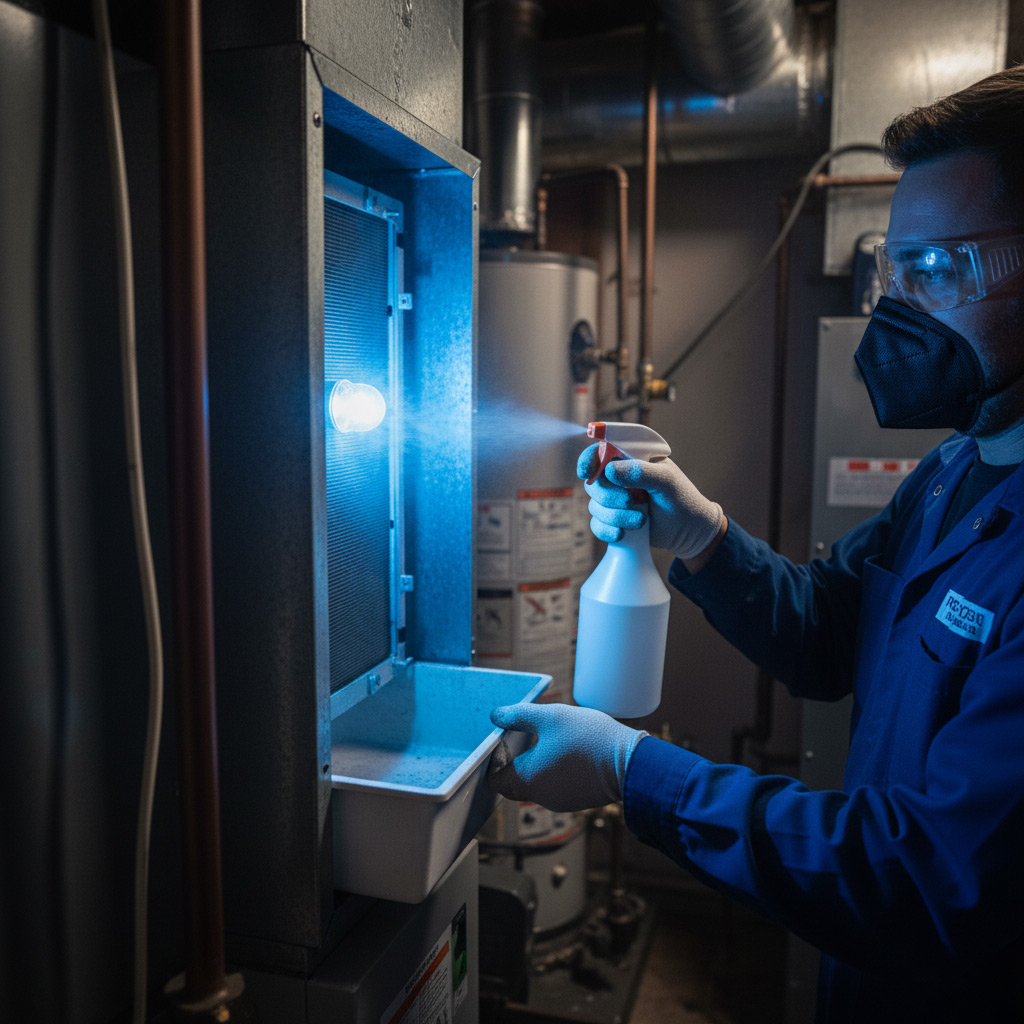
- Step 1: Find the leak using electronic leak detectors or UV dye
- Step 2: Repair the leak (often as simple as tightening a fitting or replacing a $20 valve)
- Step 3: Add only the refrigerant needed to bring levels back to spec
Notice that nowhere in those steps does it say "replace all the refrigerant." The math is simple: finding and fixing a leak costs $200-400. A complete refrigerant replacement costs $800-1,500. You do the math on why certain companies insist on the expensive option.
One more crucial point – if your heat pump uses R-22 refrigerant (common for older systems), you might hear that it's "not available anymore" or "too expensive to replace." While R-22 is being phased out, it's still available, just at higher prices. But again, we're talking about adding 2-3 pounds, not replacing the entire charge.
Your move? Ask this simple question: "Can you show me exactly where the leak is located?" If they can't answer definitively, you're being sold, not helped.
Red Flags Your Technician is Selling, Not Solving: 7 Phrases That Should Send You Running
You know that feeling when your technician starts talking, and suddenly every sentence sounds like a used car salesman's pitch? Your gut is usually right. There are specific phrases that separate honest repair pros from commission-hungry upsellers, and once you hear them, you'll never unhear them again.
When a technician utters any of these seven lines, it's time to politely end the conversation and call someone else. Don't let smooth talk cost you thousands.
Phrases That Scream "Upsell Artist"
- "This unit is at end of life" – Translation: "I want to sell you a new system instead of fixing this simple problem." Unless your heat pump is literally crumbling into dust, age alone doesn't condemn it. We've fixed 25-year-old units running perfectly after proper repairs.
- "You'll need a complete refrigerant recharge" – Major red flag. Refrigerant doesn't get "used up" like gasoline. If levels are low, there's a leak that needs fixing first. Anyone who says otherwise is either incompetent or dishonest.
- "The part is discontinued" – Maybe. But probably not. Most parts remain available for decades through aftermarket suppliers. A good technician will hunt for alternatives rather than pushing a full replacement.
"This breaker keeps tripping, you need a new compressor" – Slow down, partner. Tripping breakers usually mean electrical issues, not compressor failure. We've seen countless cases where a loose connection or faulty breaker was blamed on a "dead compressor" that worked fine once the real problem got fixed.
Here's the brutal truth: HVAC replacements generate 5-10 times more profit than repairs. When someone immediately jumps to "you need a new system" without thoroughly diagnosing the actual problem, they're not solving your issue—they're solving their commission quota.
The Greensboro Humidity Hustle
"Your system can't handle Greensboro's humidity" – This masterpiece of manipulation preys on our climate reality. While humidity does strain heat pumps, it doesn't automatically make yours obsolete. Proper maintenance and minor adjustments usually solve humidity-related issues without replacing the entire system.
Legitimate technicians will check refrigerant levels, clean coils, and test airflow before claiming your system "can't handle" local weather. If they lead with climate excuses instead of diagnostics, show them the door.
Remember: every HVAC company wants your business, but honest ones want to fix your problem correctly the first time. The rest want to maximize their profit from your panic. When you hear these phrases, trust your instincts and get a second opinion. Your wallet will thank you later.

Real Greensboro Case Study: How a $3,200 "Emergency Repair" Was Actually a $180 Electrical Fix
Meet Sarah, a homeowner on the west side of Greensboro near Friendly Center. Her 12-year-old heat pump started blowing lukewarm air during a humid August week. Within hours, a technician from a well-known local HVAC company diagnosed "complete compressor failure" and quoted her $3,200 for an emergency replacement.
The tech pointed to his thermal imaging camera, showing her "inadequate heat signatures" in the unit. He claimed the compressor was "locked up" and couldn't be repaired. What he didn't mention? He never checked the contactor, capacitor, or wiring connections.
Sarah called us for a second opinion. Here's what we found in under 15 minutes:
- A corroded contactor preventing proper electrical flow
- Loose wiring at the disconnect box
- Capacitor testing weak but still functional
The total repair cost? $180 for a new contactor and labor. Sarah's compressor was perfectly fine. That thermal imaging camera? It was picking up reduced electrical flow, not a dead compressor. The original technician either didn't know how to properly diagnose electrical issues or intentionally misled her.
This happens shockingly often in Greensboro, especially during extreme weather when homeowners are desperate. Technicians know most customers won't question "compressor failure" during 95-degree heat with 70% humidity. What they're really doing is using your discomfort to push unnecessary expensive replacements.
The red flag here wasn't just the diagnosis. It was the immediate jump to a $3,200 solution without basic electrical testing. Any competent technician checks contactors, capacitors, and wiring before declaring compressor failure. It's like a mechanic recommending a new engine without first checking if your battery is dead.
Myth #3: "This Part Isn't Available Anymore" – The Inventory Excuse That Costs Homeowners Thousands
Let me hit you with a hard truth that'll save you more money than any coupon ever could. When a technician tells you your heat pump part is "discontinued" or "impossible to find," they're either lazy or lying through their teeth. I've been in this industry long enough to know that 9 out of 10 parts are still floating around somewhere – you just need someone willing to look beyond their own van inventory.
Your heat pump wasn't built by aliens using rare earth minerals from Mars. Every component manufacturer keeps detailed records, and guess what? They sell those parts to multiple distributors across the country. The real issue? Most HVAC companies only stock what moves quickly off their shelves.
Here's what actually happens behind the scenes. The technician checks their shop inventory, doesn't see the part, and instantly declares it unobtainable. They'd rather sell you a complete system replacement worth $8,000 than spend 20 minutes calling around to find a $300 component. It's not rocket science – it's pure profit motivation disguised as helpful advice.
Red flags that scream "inventory excuse":
- Technician doesn't bother checking manufacturer websites or calling suppliers
- They claim the part is "too old" without giving you the actual part number
- You're pushed toward complete system replacement within 5 minutes of diagnosis
- They can't show you documentation of the part's supposed discontinuation
Want to blow their cover? Ask for the specific part number and manufacturer. Tell them you want to see the component yourself and ask if they've contacted the manufacturer directly. Nine times out of ten, that part is sitting in a warehouse two states away – and someone in Greensboro is willing to drive there or have it shipped overnight.
I've personally tracked down parts for 25-year-old heat pumps that other companies swore were extinct. The difference? I actually care about fixing your problem, not padding my commission check. Your wallet deserves that same level of respect.
Your Heat Pump Repair Action Plan: Step-by-Step Guide to Getting Honest Service in Greensboro
Finding a trustworthy HVAC technician in Greensboro doesn't require luck—it demands a strategic approach that filters out the salespeople disguised as service professionals. The first step is recognizing that most reputable companies don't advertise the same way as the high-pressure shops. Instead of flashy TV commercials promising "no money down," look for businesses with deep local roots and word-of-mouth referrals from neighbors who've actually used their services.
Before you even make the call, do your homework. Check online reviews across multiple platforms—not just the five-star ratings, but the three and four-star ones that reveal how companies handle problems. A pattern of complaints about unexpected add-ons or pressure tactics tells you everything you need to know. When you contact them, pay attention to how they respond to your questions. A technician who actually listens to your description of the problem before recommending a solution is worth their weight in gold.
The Diagnostic Call That Separates Professionals From Predators
When you schedule the service call, be specific about what you're experiencing. Mention the exact symptoms (strange noises, lack of heat, cycling issues) rather than just saying "it's broken." This gives you a baseline to compare against what the technician diagnoses. During the visit, watch for these green flags that indicate an honest technician:
- They perform a thorough inspection of the entire system, not just the obvious components
- They explain their findings in plain English without technical jargon meant to confuse you
- They provide clear options with pricing breakdowns rather than a single high-pressure recommendation
- They're willing to show you the specific part that's malfunctioning and explain why it failed
If they immediately start talking about complete system replacement without running comprehensive diagnostics, thank them for their time and call someone else. The most valuable tool in your arsenal is your willingness to say "I need to think about this" and get a second opinion.
Getting Multiple Quotes Without Wasting Your Whole Week
You don't need six different companies crawling through your attic to get competitive pricing. Instead, take detailed photos and videos of your heat pump system before the first technician arrives. Capture the model number, serial number, and any visible issues. When you call for second opinions, describe exactly what the first technician found and ask for their assessment over the phone. Most honest companies can give you a ballpark estimate based on symptoms and findings.
When reviewing quotes, focus on the diagnostic process itself. Does the estimate include specific part numbers and labor breakdowns? Are they recommending repairs to the actual problem or throwing in "while we're at it" extras? Remember: complexity doesn't always equal value. Sometimes the simplest solution—like replacing a worn capacitor or fixing a loose electrical connection—is the correct one.
For trustworthy heat pump repair in Greensboro, prioritize companies that offer transparent pricing, stand behind their work with solid warranties, and treat your home with respect. The goal isn't finding the cheapest option—it's finding the technician who values your trust more than their commission check.
How long should a heat pump last before needing major repairs?
Most heat pumps in Greensboro's climate should operate efficiently for 12-15 years with proper maintenance. While some components like capacitors or contactors may need replacement after 8-10 years, age alone doesn't justify full system replacement. Regular professional maintenance can extend your heat pump's life significantly.What are the most common heat pump problems in humid climates?
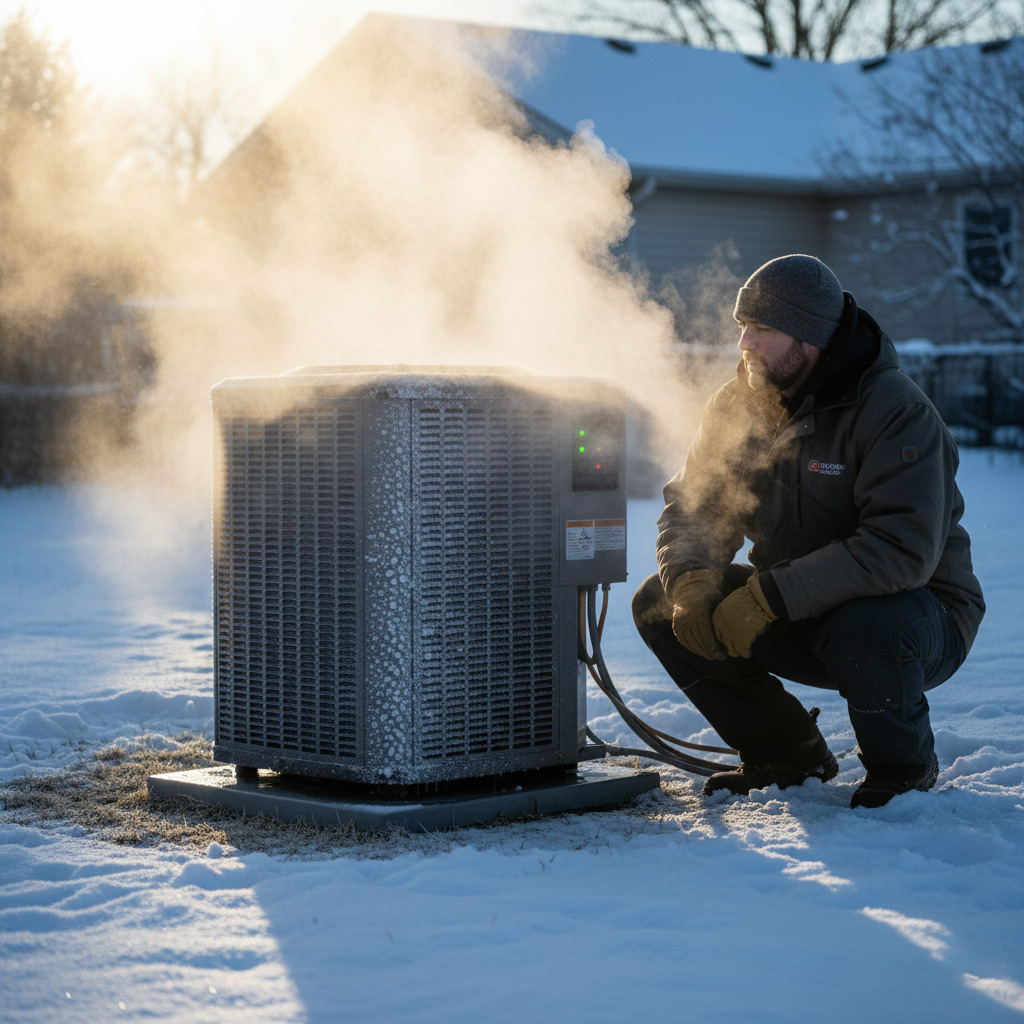
Greensboro's high humidity and temperature swings commonly cause refrigerant charge issues, frozen coils, and compressor problems. These symptoms are often misdiagnosed as system failure when they're actually repairable electrical or mechanical issues. Ice buildup on coils frequently signals airflow or refrigerant problems rather than system replacement needs.How much does heat pump repair cost in Greensboro?
Professional heat pump repairs typically cost $150-$450 for common electrical issues like capacitor or contactor replacement. Refrigerant-related repairs range from $200-$600, while compressor issues can reach $1,200-$2,500. Watch for contractors quoting $2,000+ for "emergency repairs" that may actually be minor electrical fixes.Can I repair my heat pump myself or should I always call a professional?
While homeowners can safely replace air filters and clear debris around outdoor units, most heat pump repairs require licensed professionals due to refrigerant handling and electrical safety requirements. Attempting DIY repairs on electrical components or refrigerant lines can void warranties and create safety hazards. Always call certified HVAC technicians for system diagnostics and repairs.
Greensboro HVAC provides heating and cooling services to residential and commercial customers throughout Greensboro, NC and the surrounding Triad area. Their certified technicians bring years of field experience to every installation, repair, and maintenance job. They focus on delivering reliable service tailored to Greensboro's climate and building types, backed by clear communication and upfront pricing.
Need HVAC?
We deliver timely and effective solutions in Greensboro, NC and surrounding areas (27401, 27403, 27410) to help individuals and businesses achieve their goals quickly and efficiently, with a focus on driving results and enhancing productivity. Our services are designed to provide fast and reliable outcomes that meet the unique needs of our clients.
Request Detailed Quote