
Here’s something most HVAC contractors won’t tell you: your system’s design determines whether you’ll spend the next decade in chilled, butter-smooth comfort or sweating through endless repair bills.
Most homeowners in Greensboro never ask the right questions until it’s too late—they pick a shiny unit based on price and hope for the best, then wonder why some rooms feel like a sauna and others like a walk-in freezer.
This guide strips away the marketing fluff and gives you the exact, battle-tested knowledge you need to design an HVAC system that actually works, matching your home’s layout, North Carolina’s humid summers, and your family’s real-world schedule without wasting cash on oversized equipment or shoddy ductwork.
Let’s walk through the decisions that make or break your home’s climate control—starting with the single biggest mistake people make before they even call a Greensboro HVAC pro.
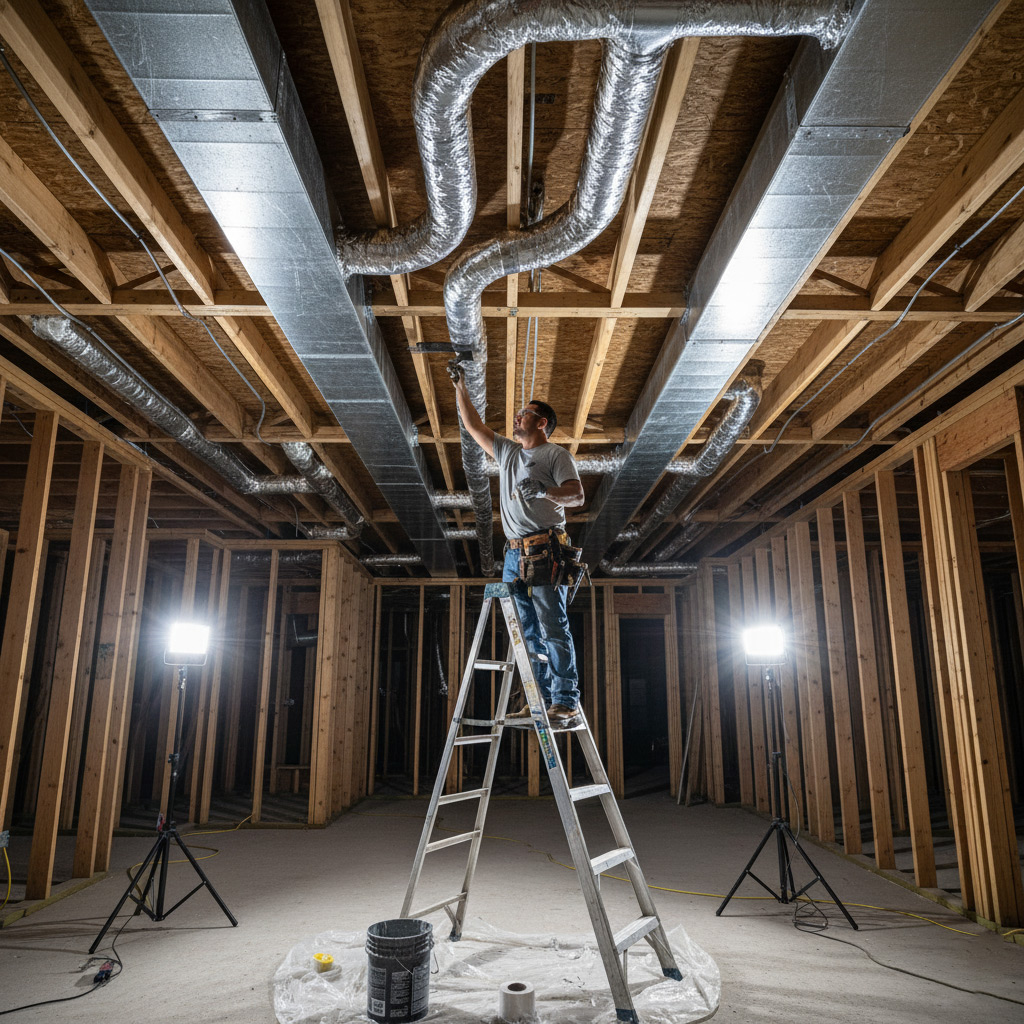
The Single Biggest Mistake Greensboro Homeowners Make (And How to Avoid It)
You've seen it happen a hundred times. Maybe you've even done it yourself. Someone's AC quits on a Tuesday afternoon in July, they panic, call the first contractor who answers, and sign a contract for whatever unit fits their budget and their crawlspace. Three months later, they're complaining about hot spots, cold spots, and energy bills that look like a car payment.
The mistake isn't picking the wrong brand or missing a rebate. It's treating HVAC like a commodity instead of a custom-engineered system. Your neighbor's Colonial Revival needs different airflow than your open-concept ranch. Their afternoon shade patterns, your west-facing windows, and the number of bodies piling into your bonus room every weekend create unique thermal profiles.
Here's what happens when you skip the design phase:
- Oversized units short-cycle, wasting energy and dying young
- Undersized systems run constantly, hiking bills and failing in extreme heat
- Poor ductwork creates pressure imbalances, making rooms unusable
- Humidity control disappears, leaving your home sticky despite "comfortable" temperatures
Contractors who skip load calculations aren't saving you time or money. They're gambling with your comfort using generic assumptions that fail spectacularly when Greensboro hits 95 degrees with 70% humidity. Your family's daily rhythms matter. The way you use each room matters. Your insulation's R-value really matters.
The fix is embarrassingly simple, but it requires discipline. Never hire a contractor who won't perform a Manual J load calculation before recommending equipment. Make them walk your home, measure windows, check insulation depth, and ask about your lifestyle. Demand to see the numbers behind their proposal.
When you force this conversation, something magical happens. Contractors who cut corners disappear. The true professionals step forward with data-driven solutions tailored to your reality, not their inventory.
Understanding Manual J, S, and D: Why Proper Load Calculations Are Non-Negotiable
Let me hit you with the brutal truth most contractors glaze over during their sales pitch. The difference between a system that works and one that hemorrhages money comes down to three boring-sounding manuals that most Greensboro homeowners never knew existed. Like betting your life savings on a horse because you like its name instead of checking its track record.
Manual J is your starting gun. It tells you exactly how much heating and cooling your home needs based on real data, not someone's "eyeball estimate." It calculates heat gain from your windows, insulation quality, roof color, even how many people live in your house. Get this wrong and you're already bleeding cash before the installation truck arrives.
Here's what happens when you skip Manual J:
- Oversized units short-cycle, turning on and off constantly like a nervous twitch
- Humidity builds up because the system cools too fast to remove moisture
- Your energy bills climb 30-40% higher than necessary
Manual S picks the right equipment after Manual J does its homework. Think of it like choosing the perfect car engine based on how much weight you're hauling. A sports car engine in a dump truck equals disaster.
This manual zeros in on specifics most Greensboro homeowners never consider. Things like the best SEER rating for our humid summers, whether you need a two-stage compressor, and if your ductwork can actually handle the airflow the unit demands. It stops contractors from selling you their most expensive model when a simpler one works better.
Manual D maps your home's air highway system. Most ductwork looks like spaghetti tossed at a wall, especially in older Greensboro homes. This manual prevents you from turning bedrooms into saunas while your living room freezes solid.
Every bend, every length, every register gets calculated for balanced airflow. It's boring engineering math, but it makes the difference between rooms that feel perfect and rooms that force family arguments about the thermostat.
Here's the kicker: contractors who skip these calculations do it for one reason only. They want the fast sale, not the long-term satisfaction. A proper Manual J calculation takes hours of measurements and computer time, but it saves you thousands in energy costs and repair bills over the system's life.
Never accept "we've been doing this for twenty years, we can eyeball it" as an answer. Would you let a surgeon eyeball your appendix removal? Demand the calculations, request the reports, and make them prove the numbers before they touch your home.
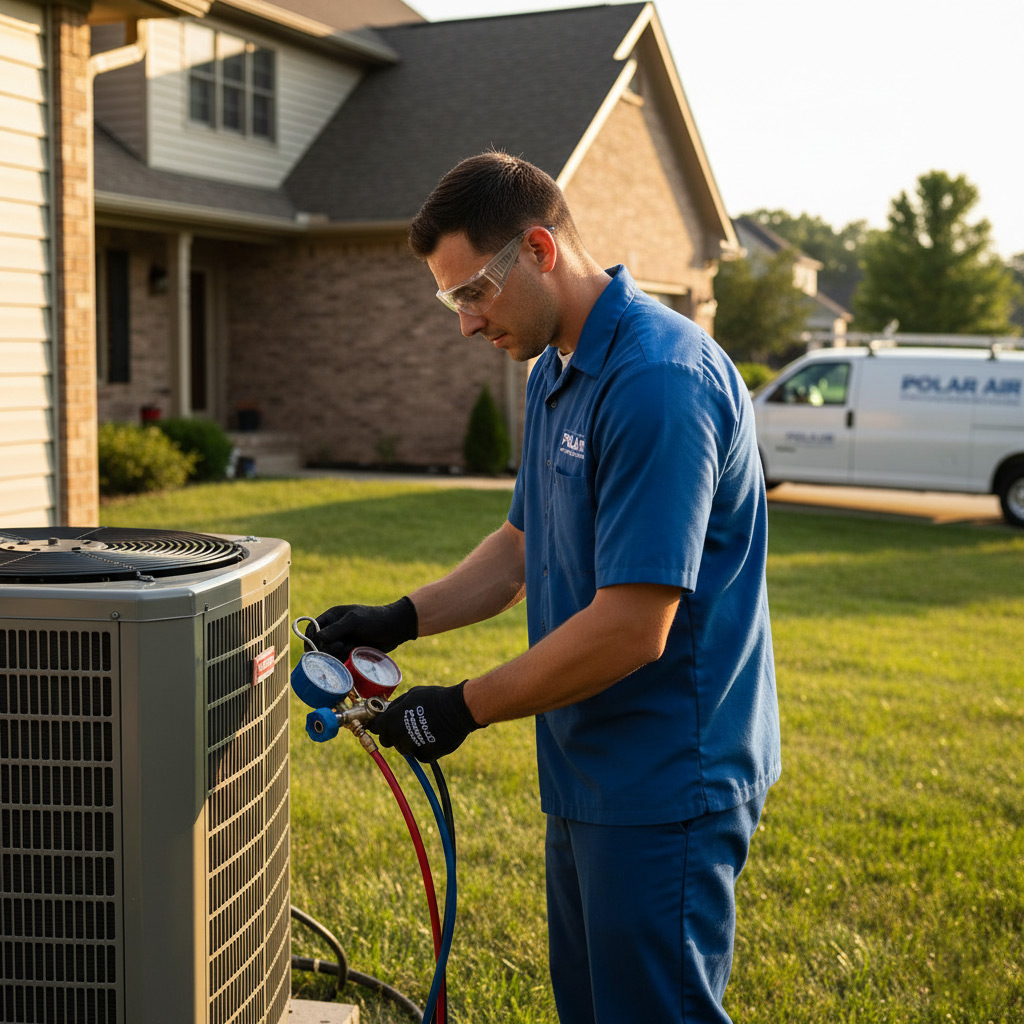
Ductwork Design Secrets: Balancing Airflow for Every Room in Your Home
Picture this: your brand-new HVAC system pumps out perfectly conditioned air, but your master bedroom feels like a sauna while the kitchen could double as a meat locker. What's the culprit? Your ductwork, the unsung highway of your home's comfort. Most Greensboro contractors slap in cookie-cutter duct systems that treat every room equally, ignoring simple physics about how air actually moves.
Airflow balancing isn't some mystical art reserved for NASA engineers. It's about sizing ducts properly for each room based on three factors: how much heat the space gains (those south-facing windows soaking up Carolina sun) how far air must travel (the bedroom at the end of the hall) and the room's purpose (kitchens need more cooling than closets). When ducts are too small or too large, you get hot/cold spots, humidity problems, and equipment that cycles on and off like a sputtering engine.
The Triangle's Ductwork Blueprint
Here's what proper duct design looks like in Greensboro homes. First, your contractor should map out:
- Return air pathways (often overlooked) to prevent negative pressure that sucks in humid outside air
- Supply duct sizing based on Manual D calculations (not guesswork)
- Dampers for each zone so you can fine-tune airflow without wrestling with vents
- Insulation values that actually handle our 90-degree summer days instead of generic recommendations
Second, materials matter more than you think. Flexible ductwork has its place (tight spaces, retrofits), but rigid metal ducts maintain airflow better over long runs. They also resist crushing during installation, which happens more often than contractors admit. If your installer starts unrolling nothing but flex duct, ask why.
Solving Greensboro's Unique Ductwork Challenges
Local homes built before 1990 weren't designed with modern HVAC in mind. Additions create Frankenstein duct systems where new rooms compete for air while original spaces get starved. Crawl spaces often hide sagging, disconnected ducts that leak conditioned air like a sieve.
Here's the fix: Demand an actual duct design plan, not just an installation estimate. Ask where manual dampers go. Make sure they're using ACCA Manual D software (the industry standard). Test the system with a flow hood after installation to catch imbalances before the crew leaves. If your contractor balks at these steps, they're either cutting corners or don't know proper ductwork design. Both are bad news for your comfort.
Choosing the Right Equipment: SEER Ratings, Sizing, and North Carolina Climate Considerations
Let's cut through the noise on SEER ratings first. SEER (Seasonal Energy Efficiency Ratio) tells you how much cooling your system delivers per dollar spent. Higher SEER numbers mean lower electric bills, especially during Greensboro's brutal summer months when humidity clings like wet wool.
Most homeowners fixate on the highest SEER rating they can afford, assuming bigger is always better. Wrong. A 20+ SEER unit in a leaky 1970s ranch home wastes money twice. The real magic happens when you match efficiency to your actual home envelope and lifestyle, not chase shiny marketing promises.
Here's what your neighbors don't know about sizing. Oversized equipment short-cycles constantly, wearing out components faster than a cheap watch. Undersized systems run nonstop, turning your utility bills into horror stories. Both scenarios ignore the critical interplay between load calculations and proper installation.
- Consult Manual J calculations before equipment selection
- Consider variable-speed compressors for Greensboro's spring/fall shoulder seasons
- Evaluate whole-home dehumidification needs alongside cooling capacity
- Factor in attic insulation quality and window efficiency upgrades
Climate-Ready Equipment for North Carolina Living
Greensboro's weather demands unique solutions. Standard equipment sold in Phoenix or Minneapolis fails here. Why? Our humidity makes 75°F feel tropical, while occasional ice storms test heating systems. Generic systems can't handle the dramatic seasonal swings.
Smart Greensboro homeowners demand equipment specifically engineered for Southeastern climate challenges. Heat pumps with enhanced dehumidification modes pay dividends during muggy July evenings. Gas furnaces with modulating burners save money when polar vortices drop temperatures unexpectedly. Single-stage units belong somewhere else, not your home.
Your contractor should explain how different systems handle our local conditions. If they push generic solutions, show them the door. Matching sophisticated climate controls to local weather patterns eliminates hot and cold rooms while shrinking energy bills.

Case Study: How Proper Design Transformed a Greensboro Family's Comfort and Energy Bills
The Thompson family had owned their 2,200-square-foot home near downtown Greensboro for about seven years. They dealt with constant hot and cold spots, uneven airflow on the second floor, high utility bills, and an HVAC unit that seemed to kick on every five minutes during July and August. Sound familiar? After a series of quick-fix attempts, they decided to invest in a complete HVAC redesign, beginning with accurate load calculations and a full ductwork blueprint.
Instead of choosing the cheapest contractor or the biggest unit, they collaborated with a local pro who followed these non-negotiable steps:
- Manual J load analysis showed their old system was oversized by nearly two tons. The new correctly sized unit runs longer cycles, improving humidity control and efficiency.
- Manual D ductwork redesign balanced airflow across both floors and eliminated bottlenecks in the original layout.
- Strategic zoning and dampers targeted the sun-drenched west-facing rooms, ending the afternoon temperature spikes that plagued their living room.
The results hit hard and fast. Summer electric bills dropped by roughly 30 percent. Humidity levels inside fell into the sweet spot, which meant less muggy air sticking to their skin. Upstairs bedrooms held steady temperatures without freezing at night. The family's total investment paid for itself in lower energy and repair costs in under three and a half years. The Thompsons now recommend that every Greensboro homeowner demand real engineering—not guesswork—before signing a contract.
Working with Greensboro HVAC Professionals: Key Questions to Ask Before You Sign
Too many homeowners in Greensboro treat HVAC contractors like interchangeable parts—they invite three trucks to their driveway, grab the lowest number, and pray it’s not a duct-tape disaster in a year. Professional installation and design can make or break your system, but only if you know which questions separate the order-takers from the craftsmen. If you don’t dig into their process up front, you’ll spend the next fifteen years paying for their shortcuts.
Before you hand over a dime, ask these questions and listen carefully to how they answer:
The Design Questions That Reveal Everything
- Will you perform a Manual J load calculation on my actual home? If they squirm or say they’ll “estimate,” show them the door. Real pros measure windows, count insulation, and model your home’s heat gain—they don’t guess.
- Do you use Manual D duct design, and can I see a copy before installation? Proper ductwork balances airflow room by room. If they slap in whatever fits, your kid’s bedroom will roast while the living room freezes.
- What’s your target airflow for each register, and how do you verify it? Smart contractors use flow hoods or anemometers—they prove the air moves where it’s supposed to. “We just eyeball it” is code for “you’re getting whatever lands in your attic.”
Installation and Sizing Red Flags
- How do you decide system size? The right answer starts with load calculations, then factors in duct leakage and climate. If they lead with square footage rules of thumb, you’re talking to a salesperson, not an engineer.
- What’s your process for refrigerant charging? Precision charging using subcooling or superheat methods matters—it’s the difference between peak efficiency and a compressor that dies three years early.
- Do you test duct leakage, and can I see the numbers? Leaky ducts dump your conditioned air into attics and crawl spaces. Pros seal and test; amateurs shrug and drive away.
Pay attention to what they’re not saying, too. Contractors who rush you, dodge technical questions, or refuse to provide written design details are selling boxes, not solutions. The Greensboro teams worth hiring will geek out on psychrometrics, show you before-and-after data from past jobs, and treat your attic like a surgical theater—clean, deliberate, and documented. They might cost 10–15% more up front, but they’ll save you 30% on energy bills and keep your family comfortable for the life of the equipment.
The right contractor views your home as a system, not a sales target. They’ll walk you through airflow strategies for North Carolina’s humidity, explain why static pressure matters, and give you real performance guarantees—not vague warranties. If you hear phrases like “good enough” or “trust me,” you’re not dealing with a pro. Demand proof, get everything in writing, and never apologize for protecting your family’s comfort and your wallet.
Final Thoughts: Your Roadmap to Lifetime HVAC Success
Look, the math here is brutally simple. Most Greensboro homeowners replace their HVAC exactly twice in their lifetime. Blow the first installation with poor design choices, and you’ll sink $10,000–$15,000 into a system that still leaves your master bedroom baking while your living room could hang meat.
But nail the design upfront—HVAC System Design you actually thought through—and you lock in two decades of silent, efficient comfort. You won’t be the neighbor who calls for repairs every April when pollen clogs an oversized unit. You won’t be the family adding a window AC to the nursery because the ducts are a chaotic mess.
The Design Choices That Outlive Your Mortgage
The manual J load calculation isn’t paperwork. It’s the blueprint that separates a $400/month summer power bill from a $180 one. Your ductwork layout isn’t just sheet metal. It’s the reason your teenager’s west-facing bedroom stays at 71°F when it’s 96°F outside.
Equipment sizing isn’t a sales pitch. It’s the difference between a system that short-cycles itself into an early grave and one that hums along for 20 years without complaint.
You now know what separates a cheap install from a bulletproof one. You know to demand ACCA Manual J, S, and D compliance, not just a contractor’s “eyeball estimate.” You know to ask about static pressure testing, duct leakage checks, and why that 16 SEER unit might be wasting your money if the ductwork leaks like a sieve.
You also know the questions that expose amateurs. “Walk me through my latent load calculations for July humidity” separates the pros from the truck-and-a-phone guys. “Show me your blower door test results” proves they actually sealed your home before sizing equipment.
Your Next Move (No Fluff. Just Action.)
Grab the notepad you tossed on the counter. Write down these three bullet points and stick them on your fridge until you hire someone:
- Get three quotes, but only from contractors who perform full manual J calculations before suggesting equipment.
- Ask for room-by-room load breakdowns and ductwork layouts. If they can’t produce them, walk away.
- Verify they’ll test static pressure and duct leakage after installation. If they balk, you’re shopping for future headaches.
And remember this: that glossy, high-SEER unit with wi-fi gadgets means absolutely zero if it’s crammed into a system designed by guesswork. You wouldn’t build a house on a crooked foundation. Don’t let anyone sell you a premium HVAC system built on shortcuts.
Your family’s comfort for the next twenty years is riding on the choices you make this month. Choose wisely.
People Also Ask
What size HVAC system do I need for my Greensboro home?
Proper HVAC sizing requires Manual J load calculations that consider your home's square footage, insulation levels, window orientation, and local climate conditions. An oversized system will short-cycle, wasting energy and failing to properly dehumidify, while an undersized system won't keep up on extreme temperature days. Most Greensboro homes need 400-600 square feet per ton of cooling capacity, but only a professional load calculation can determine the exact sizing.How much does a new HVAC system cost in Greensboro, NC?
A complete HVAC system replacement in Greensboro typically ranges from $5,000 to $12,000 depending on the home size, equipment efficiency ratings, and complexity of installation. High-efficiency units with SEER ratings above 16, zoned systems, and homes requiring extensive ductwork modifications will fall on the higher end of this range. Many Greensboro HVAC companies offer financing options and may help homeowners access North Carolina energy rebate programs.What SEER rating should I choose for my Greensboro home?
North Carolina's climate requires a minimum SEER rating of 14-15 for optimal comfort and efficiency, but Greensboro homeowners often benefit from units rated 16 SEER or higher. Higher SEER systems provide better humidity control during our humid summers and significant energy savings that offset the initial investment over the system's lifespan. Consider your budget, how long you plan to stay in the home, and whether you qualify for federal tax credits when deciding between efficiency tiers.How often should I have my HVAC system serviced in Greensboro?
Greensboro HVAC professionals recommend twice-yearly maintenance: once in spring before cooling season and once in fall before heating season. Regular service includes cleaning coils, checking refrigerant levels, inspecting electrical components, and ensuring proper airflow throughout your system. This preventive approach helps catch small issues before they become expensive repairs and maintains your manufacturer's warranty requirements.Do I need to replace my ductwork when installing a new HVAC system?
Ductwork replacement depends on the age, condition, and design of your existing system, as improperly sized or leaky ducts can reduce efficiency by up to 30%. If your Greensboro home's ductwork is over 15 years old, has visible damage, or wasn't properly designed for the space, replacement often provides better airflow and energy savings. Professional HVAC technicians can perform duct leakage tests and Manual D calculations to determine if your ductwork needs replacement or just sealing and insulation improvements.
Please provide 2-3 key personnel names, titles, and credentials (e.g., licenses/certifications) to include in the author box, or confirm that you want company-level attribution.
Need HVAC?
We deliver timely and effective solutions in Greensboro, NC and surrounding areas (27401, 27403, 27410) to help individuals and businesses achieve their goals quickly and efficiently, with a focus on driving results and enhancing productivity. Our services are designed to provide fast and reliable outcomes that meet the unique needs of our clients.
Request Detailed Quote